
Personal Protective Equipment for Industrial Workers: A Complete Guide to Workplace Safety
Personal Protective Equipment (PPE) is a requirement in modern industrial environments that cannot be ignored if workers are to be kept safe, risks in the workplace are to be minimized, and workplace productivity is to be improved. The correct PPE kit is essential for safeguarding workers against injury and risk of exposure in a variety of industries, from construction and manufacturing to logistics and mining.
There are several risks associated with industrial operations: falling objects, chemical exposure, electrical hazards, sharp objects, and heavy machinery. This is why protective equipment is necessary to ensure safety standards and operations. A confident and competent workforce enhances its performance and its role in workplace accident prevention and business efficiency.
In this guide, you will learn about the various types of PPE, their importance, proper use, and what to look for when choosing the right equipment for use in industry.
What do you mean by personal protective equipment (PPE)?
Personal Protective Equipment (PPE) in the workplace is safety equipment that is worn to prevent exposure to physical, chemical, biological, and mechanical hazards in the workplace. Complete PPE includes clothing, boots, goggles, gloves, helmets, etc.
PPE is meant to minimize exposure to hazards and prevent injuries or fatalities. In high-risk industries such as mining and construction, PPE is a requirement by international safety standards like OSHA PPE requirements and OSHA PPE standards. Common PPE elements include:
- Safety helmet for head protection
- Eye protection (safety goggles)
- Hand protection gloves.
- Safety shoes for the safety of the feet.
- Safety vest for visibility
Industrial safety is of critical importance. Every year, thousands of workplace injuries occur due to a lack of proper safety precautions in the workplace. These accidents result in lost time, legal problems, and financial losses for businesses, as well as injury to workers. When you use safety measures correctly, using PPE, the outcomes include:
- Decreased on-the-job accidents and injuries
- Enhanced staff confidence and morale
- Greater yields and productivity.
- Adhering to safety standards
- Reduced operating and compensation expenses
A productive worker is a safe worker. By using PPE kits, you allow your staff to remain safe and more productive.
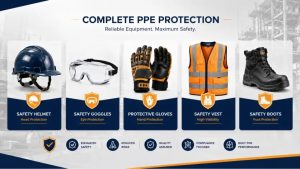
Types of protective equipment that a safety Worker must use
It is important to know what kinds of protective equipment are required for safety workers in order to choose the right kind of protective equipment for various job roles. Levels of protection vary by industry, depending on the risk.
Safety Helmet
A safety helmet is worn by workers to prevent head injuries from falling objects, impact, or electrical hazards. It is frequently used in buildings, mines, and industrial areas.
Safety Goggles
Safety goggles are used to keep the eyes safe from dust, chemicals, sparks, and debris. These are important in the welding, chemical, and manufacturing sectors.
Safety Gloves
Safety gloves are used to prevent cuts, burns, chemical exposure, and abrasions to the hands. There are a variety of gloves depending on the industry, for example, a cut-resistant glove or a chemical-resistant glove.
Work Boots
Work boots are designed to keep the worker safe from heavy objects, slippery surfaces, and electrical hazards. They form an essential component of industrial workers’ PPE kits.
Safety Vest
A safety vest is used to make a person more visible in low-illumination or high-traffic areas. This is particularly crucial for construction workers and road maintenance crews.
Proper use of PPE is as critical as the use of PPE. Wearing the right personal protective equipment (PPE) provides maximum protection and minimizes the risk of accidents. With Eco safety, you easily purchase all or any of the safety equipment at an affordable price. No need to look for the PPE equipment near me, for affordable safety equipment, such as gloves, a helmet, goggles, work boots, or even a safety vest.
Guidelines for Using PPE
These are the guidelines that workers should follow:
- Wear all PPE before entering hazardous areas
- Make sure it fits and feels comfortable to wear.
- Check equipment for damage before using
- Replace damaged or worn-out PPE as soon as possible.
- Wear PPE as necessary for the job
Mostly, the chances are high when you don’t wear the PPE properly.
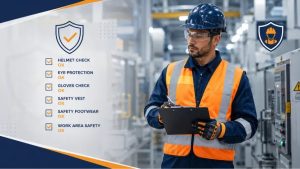
Mining Needs PPE: High-Risk Industry Protection
Mining is one of the most hazardous businesses in the world, and as such, Mining PPE is extremely important. Dust and toxic gases, heavy machinery, and underground hazards are all potential dangers to workers.
Essential PPE for mining:
- Heavy-duty safety helm with headlamps
- Respiratory protection masks
- High-durability safety gloves
- Steel-toe work boots
- High-visibility safety vests
- Abrasion-resistant protective clothing.
PPE in mining is not something that can be optional; it’s something that you need to put on to survive.
OSHA PPE Requirements and Safety Standards
The OSHA PPE requirements and OSHA PPE standards are the guidelines that govern workplace safety on a global level. These standards make sure that employers supply the correct protective gear and training to employees.
Some of the most important OSHA concepts are:
- Employers are required to supply PPE for workers for FREE.
- Correctly using PPE needs to be taught to workers.
- PPE should be regularly inspected and maintained.
- PPE should be selected after a hazard assessment.
When you follow these standards, you can help businesses minimize risk and ensure regulatory compliance with international safety standards. For the industrial worker, PPE is an essential part of their job, offering protection from any hazardous accident. Some factors they should never ignore:
- Comfort and usability: The durability and quality of materials. The durability and quality of materials.
- Industry-specific requirements: The correct PPE kit will ensure that workers are fully protected while offering them the mobility and efficiency they need.
Tips to maintain the PPE
The correct use and care will ensure that PPE can be used for as long as it lasts and does its job. Workplace safety PPE maintenance tips can assist organizations in avoiding equipment failures and ensuring that the equipment remains in good working order.
Best practices include:
- Cleaning after use, 24 hours a day, 7 days a week.
- The use of suitable storage facilities in dry and secure locations
- Regular checks for damage are required.
- Worn-out gear is to be replaced at once.
Providing employees with instructions about maintenance processes.
Industrial workplace risks can be minimized, and consistent protection can be provided by well-maintained PPE.
Safety Tips for Work and Accident Prevention
By following simple safety guidelines at work, industrial accidents and injuries can be minimized. When you want to be safe, you need to properly wear PPE kits because prevention is better than a cure. Here are some key safety tips:
- Ensure that full PPE is worn at all times before the commencement of work.
- Obey safety signs and directions.
- Don’t take shortcuts in dangerous jobs.
- Report unsafe situations right away
- Take part in regular safety training sessions
Such practices can help ensure good accident prevention at work and make the job safer in general.
FAQs
What makes up a standard PPE kit for industrial workers?
The standard PPE kit for an industrial worker typically consists of specific items to ensure that they are protected, including a safety helmet, safety goggles, safety gloves, work boots, and a safety vest. Some other equipment, such as respiratory masks or face shields, may also be needed, depending on the industry. Every item serves a particular function in the complete protection of the worker and the elimination of work hazards.
Why is it important for employees to wear PPE items in the workplace to ensure productivity and safety?
Personal Protective Equipment in the workplace is important as it reduces the risk of injuries and accidents occurring, especially when you work as a pest controller or work in a mining firm, you need to be safer to avoid any chemical reaction and hazardous injury. Safety allows workers to do their jobs more effectively, enhancing the productivity of the workplace. Wearing PPE correctly also helps to prevent workplace accidents, meet OSHA PPE standards, and ensure businesses run smoothly without interruptions.
How can PPE be stored for extended periods of time?
Some PPE maintenance tips for workplace safety: Regularly clean, store PPE in dry areas, and inspect for damage on a regular basis. Worn or damaged parts and equipment must be replaced as soon as possible. These are the practices that help to keep protective devices in good working condition and continue to effectively provide safety protection for workers in an industrial setting.
Conclusion
Establishing a strong safety culture starts with the right equipment, training, and consistent practice of safety procedures. Personal Protective Equipment (PPE) for industrial workers is the cornerstone of workplace safety and an important component of risk reduction in all industries. Every piece of a PPE kit is essential. If you are looking to buy PPE products, such as safety vests, safety gloves, work boots, safety goggles, and a safety helmet, they are all available on eco safety. Choose us and get a complete PPE kit to ensure a safer work environment while safeguarding yourself. Whether you are a pest controller or working on a construction site, safety is the top priority.
Pingback: Disposable Coveralls for Pest Control Professionals: Why Do They Matter?