
Safety Helmet: Why Using a Safety Helmet Is Important
A safety helmet is one of the most important parts of personal protective equipment, made to protect workers from head injuries in dangerous environments. Head injuries are common workplace accidents, often causing long-term injuries. In various industries, a single impact to the head from falling things, moving machinery, or accidental slips can result in life- changing consequences.
The helmet provides safeguarding by absorbing impact forces and minimizing the chances of injuries during accidents. In the workplace, a helmet protects workers from hazardous things. In industrial areas, they protect against collision with equipment, overhead installation, and unexpected impacts. Pest control technicians work in challenging and dangerous environments, such as warehouses, factories, rooftops, and where safety risks are very high. While performing fumigation, termite control, and rodent control, technicians are exposed to head injuries due to falling objects, uneven ceilings, sharp edges of structures, and the use of chemicals.
A safety helmet ensures that the pest control technicians adhere to health and safety standards. Use of PPE not only safeguards the pest control professional from serious injuries but also enhances the pest control professional’s confidence while working in high-risk environments. Prioritizing safety helmets as part of standard pest control ensures that companies protect their employees and provide efficient and safe pest control services. Eco-safety recommends an open-face helmet and the full-face helmet to pest control technicians.
What Is a Safety Helmet?
A safety helmet is equipment used during high-risk work that is designed to safeguard the head from moving objects, as well as accidents. In the case of pest control professionals, a helmet gives safeguarding from chemical splashes and electrical shock, machinery, or lighting. A safety helmet in Pakistan consists of a hard outer layer, a suspension system, and a chin strap.
For pest control technicians, helmets are important when working in hazard areas, warehouses, rooftops, ceilings, and storage areas. A helmet gives safeguard not only from physical contact but also from dust, debris, and little chemical splashes. Helmets plays an important role in head injuries, minimize severity, and ensuring worker safety in high-risk environments.
Why Using a Safety Helmet Is Important for Pest Technicians
Pest technicians frequently work in areas including heights, inside ceilings, crawl spaces, and storage places, where visibility and movement are limited. A helmet gives safeguarding against injuries to the head from falling objects, accidental slipping, and sudden contact with beams or pipes. In fumigation and structural pest control operations, a helmet can also help minimize risks of exposure by serving as an additional barrier when combined together with other personal protective equipment like respirators and coveralls.
The using of a safety helmet would also promote professional credibility and safety policies. Using a helmet is very important to prevent life-threatening health issues, reduce the severity of accidents, and allow technicians to perform their functions confidently and professionally.
Common Hazards Faced by Pest Control Technicians without a Helmet
Pest control technicians are exposed to various hazards when they work without protective gear like safety helmets. Among these hazards are injuries from head impacts. Technicians are commonly exposed to head injuries like falling objects while undertaking operations like warehouse, ceiling, roof tops, or construction work. These areas are mostly crowded or poorly lit, which exposes the technician to injuries like slipping or beam impacts that can cause head injuries if there is no safety helmet. The technician may also be exposed to injuries like those from tree branches while working inside the open environment. Furthermore, working in proximity to machinery, ladders, or platforms will increase the risk of head injury in cases of accidents caused by sudden movement or lack of balance.
Where is the helmet used by pest technicians?
The safety helmet in Pakistan used in high-risk places has the key points given below
Key points
- Termites control treatment in the foundation and on the rooftops
- Fumigation in warehouses, silos, and shipping containers
- Rodent control in urban and commercial settings.
- Working near an electrical panel or mechanical equipment
- Pest inspections in confined or poorly lit places.
Role of Safety Helmets in Fumigation
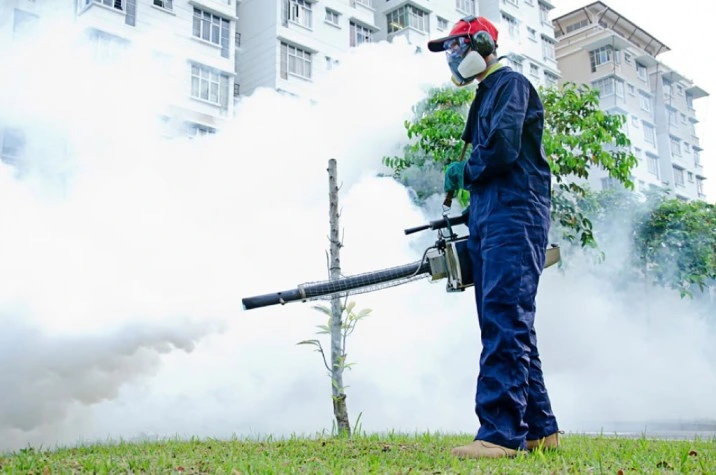
Fumigation frequently takes place in badly ventilated places such as warehouses, containers, basements, and silos. In such areas, the pest control technicians may be faced with low head clearance, structural barriers, and poor visibility. Safety helmets protect the pest control technicians from sudden head contact and falling things, enabling the pest control technicians to work in a confined space with their focus on fumigation techniques. It also gives the possibility of minimizing injury related to working at or around heavy machinery, on ladders, or in an elevated position. Most safety-aware helmets can be fitted with respirators, face shields, and other PPE for total protection without hindrance to any fumigation processes.
Pest companies responsibilities for the helmet safety
Pest companies are responsible for providing good- quality of helmets and ensuring technicians are trained in their correct use. On the other hand, technicians are accountable for using helmets all the time, submitting damaged equipment, and following safety procedures. Companies are obligated to instruct the technician when, where, and how to wear a helmet properly, as well as to ensure proper fitting and routine use at all locations where they work. They must also enforce helmet use through safety policies and supervision, especially during high-risk activities such as fumigation, warehouse inspections, rooftop work, and confined space operations. Regular inspection, maintenance, and timely replacement of damaged or expired helmets are also the employer’s duty.
Common Myths about Helmet
Most pest control technicians believe that helmets are uncomfortable to wear or that they are not required for short tasks. Some argue that helmets are too cumbersome to carry around, though modern helmets are lightweight and designed for the long hours spent at work. Another common misconception is that experience is the only safeguard against accidents, while the fact is that accidents can occur at any time due to unforeseen conditions. Most people think that helmets are necessary when undertaking big jobs, while the fact is that most accidents occur during small jobs. Some argue that helmets impede vision, while the fact is that a good helmet does not impede vision at all.
Helmet Color Coding and Identification
The use of various colors on the helmets helps in the identification of pest control technicians, supervisors, and trainees in the workplace. The color code system helps in improving workplace management, supervision, and coordination of safety, especially in large-scale fumigation and industrial pest control.
How to choose the best quality helmet in Pakistan?
There are various types of safety helmets in Pakistan.
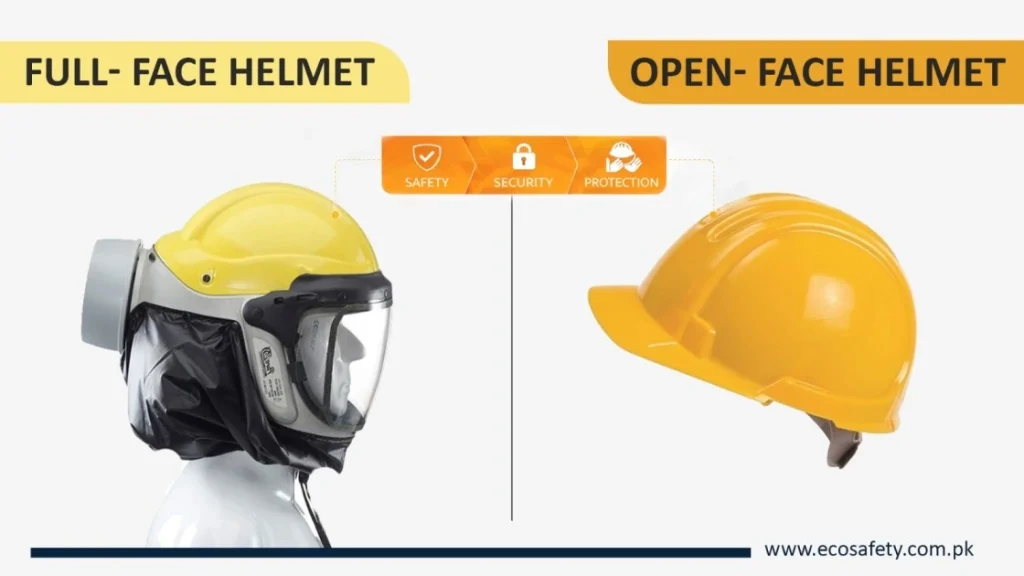
Full- face helmet
A full face mask provides complete protection for your face, head, and chin. It provides maximum safety and protection from chemicals and the environment.
Open- face helmet
An open face helmet provides protection for your head and sides. It also provides ventilation and visibility. This helmet is suitable for a low-risk environment.
Key Benefits of a Safety Helmet
All types of safety helmets in Pakistan are a major part of personal protective equipment for workers. Mostly in Pakistan, technicians wear an open-face helmet. Eco-safety recommends that the pest control technician use both types of helmets depending on the situation. The use of a helmet can greatly reduce the possibility of head injuries. The key benefits of using a safety helmet are discussed below.
Protection against head injuries
The first advantage of a helmet is that it protects the head from injuries caused by falling objects, debris, or accidental contact. Pest control workers are constantly at risk with risk tools. The best helmet will absorb the impact of force.
Shielding from chemical exposure
Frequently, the duties of a pest control technician include fumigations, chemical sprays, and rodenticides. Safety helmets like the open face helmet, full face helmet, etc., widely used in Pakistan, have the option for the use of face shields/airflow devices.
Improves Visibility and Workplace Awareness
Pest control technicians working in bad lit basement, storage rooms. This will ensure that other people, such as coworkers and clients, can see the technician easily and avoid accidental collisions with equipment or other dangers.
Comfort for Long Hours of Work
The contemporary safety helmet is made to be light and ventilated. The technicians felt comfortable and could work for long hours. The comfortable helmet will help to avoid fatigue and strain on the neck, so that the workers remain focused on safety during work.
Compliance to Safety Standards
The use of a good quality helmet can helps a pest control technician in adhering to safety standards at his workplace. This not only ensures the safety of the technician but also improves his professional credibility.
Increases Confidence and EfficiencyA helmet provides confidence and peace of mind to technicians because it protects them from head injuries and exposure to chemical splashes. When the technicians wear helmet they fell safe, they focus on their job, which increases efficiency and the quality of pest control services.
Common Mistakes When Using Safety Helmets
Using the Helmet Incorrectly
Helmets that are worn too loosely, too tightly, or with the front facing backward do not offer complete protection.
Not Securing the Chin Strap
An unsecured or loose chin strap may lead to the helmet coming off during an accident.
Using Damaged or Old Helmets
Cracked, dented, or worn-out suspension systems decrease the impact-resistance capacity of the helmet.
Modifying the Helmet
Helmets may be damaged by heat, sunlight, or chemicals; hence, proper maintenance and storage are required.
Removing Helmets in “Low-Risk” Areas
Even in low-risk zones, there may be dangers; therefore, removing the helmet is not a good idea.
Frequently Asked Questions (FAQs)
What is the price of a safety helmet in Pakistan?
The price of a safety helmet in Pakistan is between 500 and 4,500, depending on the brand and quality of the helmet.
How many types of safety helmets?
There are various types of helmets available for protection. Type 1 for impact on top, Type 2 for impact on sides, and Type 3 for electrical protection.
Which company imported safety helmets in Pakistan?
The safety helmet helps IPM ensure that the technician is protected while performing the inspection, monitoring, and non-chemical control. The safety helmet helps the technician safely enter roofs, warehouses, and restricted areas to ensure effective pest monitoring, proper positioning of traps, and preventive work key steps for effective, safe, and sustainable IPM.
How does a helmet help practice IPM?
A safety helmet helps IPM in ensuring that technicians are safeguarded when conducting inspections, monitoring, and non-chemical control. The safety helmet enables safe entry into roofs, warehouses, and restricted areas to ensure effective pest monitoring, correct trap placement, and preventive work key steps for effective, safe, and sustainable Integrated Pest Management.
What is the importance of helmets?
The helmet is an important because it protects the head injuries from falling things, impacts, and low-height hazards. It prevents serious injuries to the head, promotes safe working environments, and enables technicians to undertake their tasks with confidence, especially in high-risks environments such as warehouse sites, pest control, and industries.
Conclusion
PPE is very important for technicians. Safety helmets are a significant consideration in personal protective equipment. The helmet provides safeguarding by absorbing impact forces and minimizing the chances of injuries during accidents. In the workplace, a helmet protects workers from hazardous things. In industrial areas, they protect against collision with equipment, overhead installation, and unexpected impacts. A safety helmet in Pakistan is an important part of safeguarding against harmful things.