
Why PPE Is Essential During Pest Control Treatments: Protecting Workers from Chemical and Biological Hazards
Pesticides have been extensively used throughout Pakistan in commercial, industrial, and residential premises to deal with insects, rodents, termites, and other pest species that pose a threat to humans, their possessions, and businesses. Despite their high effectiveness, they subject pest controllers to various chemical and biological risks during inspections, pesticide application, and other activities involved in pest management. That’s why PPE for pest control industry is an essential component of all professional pest control services.
Eco Safety is a reliable provider of quality personal protective equipment that includes PPE for pest controllers and other industries. Eco Safety provides safety equipment, which includes respirators, nitrile gloves, coveralls, safety glasses, visors, safety shoes, and various protective equipment. The equipment helps protect workers against chemical and biological risks, thus allowing them to carry out pest control work in a safe, effective, and healthy way.
It should be remembered that pest control PPE is not an option; rather, it is a crucial safety measure which ensures worker protection and, consequently, contributes to professional pest management practices. This article aims to explain the importance of using pest control PPE, as well as to discuss the dangers encountered in pest management and the use of PPE.
Why Pest Control Professionals Face Serious Workplace Hazards
There are many workplace hazards that pest control workers face when undertaking their duties, such as inspecting, pesticide spraying, fogging, fumigation, and sanitization/disinfectation services in different sectors. It is essential to know about all hazards in order to select appropriate personal protective equipment (PPE).
- Chemical Exposure: The use of pesticides through mixing, spraying, fogging, and fumigation is a health hazard both on a short-term and long-term basis.
- Skin Exposure: The exposure of the skin to chemicals can cause skin irritation, burning, and allergic reaction to poisoning.
- Inhalation of Chemicals: Inhalation of pesticide chemical particles such as vapors, aerosols, dust, and fumes can pose a health hazard by inhalation.
- Eye Exposure: The spillage of pesticides and spray may cause irritation to the eyes if technicians are not wearing proper eye protection.
- Biological Contaminants: Pests can also be a source of contamination in infested premises where there might be bacteria, fungi, viruses, mold, rodent droppings, bird droppings, and insects.
- Confined Space Work: Basements, crawl spaces, roof cavities, silos and storerooms are poorly ventilated and thus expose technicians to hazardous chemicals.
- Heat Stress with Protective Clothing: Heat stress can occur when working in hot climates of Pakistan with protective equipment on.
Efficient use of PPE in the process of pest control, including gloves, masks, safety goggles, and protective suits, is highly recommended. Eco Safety offers premium quality PPE that allows pest controllers to work safely in difficult conditions.
Why PPE Is Essential During Pest Control Treatments
Regular exposure to chemicals, contaminated surfaces, and other biological agents means that PPE for pest control is one of the basic requirements for all pest control treatments. Personal protective equipment during pest control not only safeguards workers from possible health dangers but also limits their exposure to toxic materials. Usage of appropriate pest control safety gear leads to a safe working environment and also increases the efficiency of work.
- Prevents Direct Chemical Exposure: Proper gloves, protective clothing, and other chemical-resistant gear prevent chemical exposure from coming into contact with the skin.
- Protects the Respiratory System: The proper use of a respirator provides protection against pesticides and their particles to protect the respiratory system when applying pesticides and fumigation.
- Reduces the Risk of Skin Allergy: Aprons and nitrile gloves protect against any skin irritations, allergies, and chemical absorption.
- Prevents the Risk of Eye Injury: Safety goggles while spraying pesticides and a face shield prevent the risk of injury to eyes due to splashes of pesticide chemicals and dust.
- Improves Worker Confidence: When the technicians wear the right PPE, they can undertake inspection, spraying, fogging, and fumigation with greater confidence as they know that they are safeguarded against the dangers of their work environment.
- Meets Workplace Safety Standards: Correct use of personal protective equipment during spraying of pesticides will ensure that pest control firms meet their occupational health and safety requirements and develop a high level of workplace safety.
Essential PPE Every Pest Control Technician Should Wear
The selection of PPE in pest control is important to protect the health of any technician against chemical and biological risks in case of the use of pesticides, fumigation, or normal pest control operations. The kind of PPE in pest control that must be used will depend on the pesticide, method of application, and risk of exposure.
Respiratory Protection
Respiratory protection is one of the key elements of PPE required by pest control technicians, as they are constantly exposed to vapor and aerosol forms of pesticides, dust, and fumigation chemicals.
- Half-Face Respirator Mask: These types of respirators are usually employed during mixing, spraying, and fogging of pesticides. With the proper cartridges installed, they offer good protection from pesticide air pollution and allow working comfortably.
- Full-Face Respiratory Mask: The principle of a full-face respirator mask is that it seals against the face, offering filtration of all respiratory intake and protecting eyes and face from any airborne hazards. The air is drawn in through the replaceable filters/chemical cartridges in either negative or positive flow.
- Disposable Masks: Disposable masks like surgical masks, KN95 respirators, and dust masks offer only a basic level of protection from non-toxic dust and airborne particulates when conducting inspections or cleaning operations. They are inappropriate to use for protection from pesticide vapors and fumigation, and they cannot replace a respirator when using pesticides.
- Self-Contained Breathing Apparatus (SCBA): SCBA is a breathing apparatus that has an internal air supply, enabling pest management technicians to perform their duties in enclosed environments or areas where there may be poisonous gases, chemical fumes, or insufficient amounts of oxygen.
-
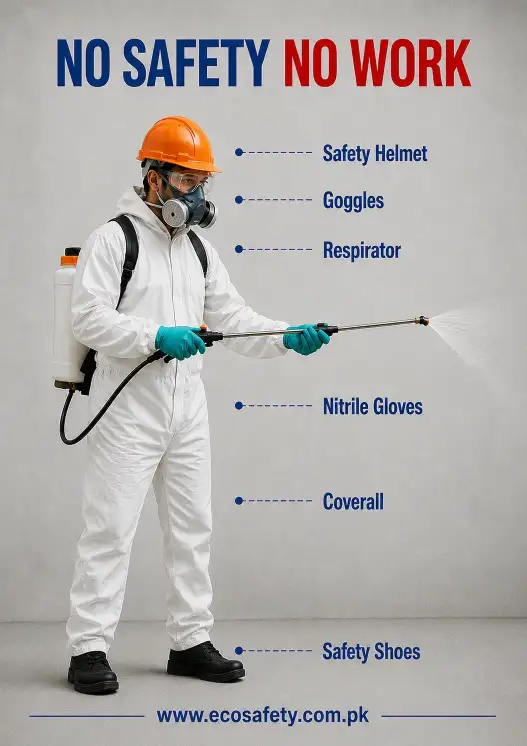
Complete PPE for pest control helps protect technicians from chemical exposure, ensuring safe, compliant, and effective pest management operations.
Protective Clothing and Gloves
The protective clothing and gloves are the key barrier that will ensure protection of the technician performing pest control from any hazardous chemicals. Proper use of the required pest control protective clothing lowers the chances of exposure to any pesticide while mixing, spraying, fogging, fumigating, and cleaning of the equipment.
- Nitrile Gloves: Gloves are the major barrier between the individual and pesticides. Nitrile gloves are mostly used as they offer excellent resistance against many pesticides, solvents, and other chemicals while being tough, flexible, and comfortable.
- Protective Coveralls: Protective coveralls for pest control, either disposable or reusable, protect the whole body from exposure to pesticides.
- Safety Boots/Safety Shoes: The chemically resistant safety shoes shield the foot from contamination due to spillage, leakage, or contact with contaminated floors. They are slip-resistant and stable in wet conditions.
- Chemical-Resistant Aprons: The aprons give extra protection in the process of pesticide mixing, loading, and cleaning the equipment when exposure to chemicals is more frequent.
- Head Protection: Disposable hoods, caps, or chemical-resistant headwear can be used to prevent any contamination of the hair, scalp, and neck area.
Eye and Face Protection
Eyes and faces are particularly susceptible to splashes of pesticides, spray drifts, and airborne chemicals while dealing with pests. Eye and face protection is required in order to avoid injuries and minimize exposure to any harmful chemicals.
- Safety Goggles: Safety goggles for pesticide spraying ensure complete sealing of the eyes and protect the user from chemical splashes, dust, and pesticide aerosols during mixing and spraying of pesticides.
- Face Shields: Face shields offer extra protection of the whole face and are recommended during mixing, pouring concentrated pesticides, and high-pressure spraying. It is advised to use them together with safety goggles.
- Protection During Pesticide Mixing and Spraying: Exposure of the eyes and face is especially high during mixing and spraying of pesticides. Use of proper eye and face protective equipment will aid in prevention of irritation and eye injuries.
At Eco Safety, we provide reliable eye and face protection that will ensure the safety of pest controllers during their work.
Common PPE Mistakes That Increase Pesticide Exposure
However, the utilization of even the best PPE in pest control can be ineffective if used incorrectly. There have been many accidents in the workplaces of the pest control sector in Pakistan due to the negligence of basic procedures in using PPE.
- Wearing Damaged Gloves: Nitrile gloves that are either punctured or torn are likely to make people more susceptible to the dangers in handling pesticides.
- Using the Wrong Respirator: Incorrect use of a respirator can be done by using the wrong respirator and filter cartridges at the wrong time when spraying pesticides.
- Reuse of Disposable Products: We are aware that disposable personal protective equipment is meant for single-use purposes. The reuse of disposable PPEs will increase the chances of exposure to pesticides
- Use of Contaminated Clothing: Using or bringing home contaminated clothing that is contaminated with pesticides increases the possibility of toxin exposure. PPEs contaminated with pesticides need to be taken off and washed properly.
- Removing PPE Incorrectly: Removing contaminated gloves, respirators, or coveralls may lead to contamination of the skin, face, or clothes through contact with bare skin.
How to Choose the Right PPE for Different Pest Control Duties
Not all types of pest control duties pose the same degree of danger, and therefore, PPE for pest control needs to be selected based on the kind of treatment, pesticides used, and the degree of exposure. The use of personal protective equipment for pest control will not only safeguard the technician but also ensure successful pest management.
- Cockroach Control: The crack and crevice treatment procedure involves the use of protective equipment, including nitrile gloves, safety glasses, a protective apron, and a half-face respirator due to the lack of good ventilation.
- Mosquito Fogging: It entails spraying extremely small pesticide droplets that might be ingested into the body system. In this case, it becomes necessary to put on a full-face respirator, safety glasses, nitrile gloves, coveralls, and safety footwear
- Rodent Control: During rodenticide usage, there are chances of exposure to biological hazards like rodent feces and urine. Use of latex gloves, safety shoes, and respiratory protection equipment is recommended while cleaning the infested area.
- Termite Treatment: There are risks involved of splashes or chemical exposure while using liquid termiticides or drilling and injecting them. Thus, it is recommended that one wear complete protective gear, goggles, and respirators.
- Fumigation: In fumigation, highly toxic gaseous substances are employed and thus require a maximum level of protection. The method is mainly used in controlling stored pests such as rice weevil, tobacco beetle, lesser grain borer, khapra beetle, saw-toothed grain beetle, and Indian meal moth. Only professionals and authorized personnel should be involved in fumigation using PPE, which includes a coverall, nitrile gloves, eye protection, and safety shoes.
Maintaining and Replacing PPE
It is very necessary to keep PPE for pest control, as it will continue to provide protection. But if PPE is worn out or not properly maintained, there is a chance that pesticides may get in contact with you.
- Cleaning Reusable PPE: Reusable respirators, safety goggles, face shield, and aprons must be thoroughly cleaned and disinfected after each use as per the manufacturers’ guidelines.
- Proper Storage: All PPE must be stored in a clean, dry, and well-ventilated place that is not directly exposed to sunlight or any form of moisture, pesticides, or other chemicals. Proper storage will help to increase the lifespan of the safety gear and also prevent contamination.
- Inspect PPE Before Use: Always make sure you inspect gloves, respirators, goggles, coveralls, and safety boots prior to the start of work. Look for cracks, tears, worn-out seals or straps, and any other signs of deterioration which may affect the level of protection provided by the PPE.
- Replace Respirator Cartridges When Needed: The cartridges used in respirators must be changed according to the recommendations of the manufacturer or when difficulty in breathing arises, chemical odors or taste are noticed, or at the end of the service life of the cartridge.
- Replace Damaged Gloves and Coveralls: Nitrile gloves and coveralls need to be replaced in case of any tearing, puncturing, excessive wear, or contamination from pesticides, as they would then fail to provide enough safety to the user due to damage.
How Quality PPE Improves Safety and Professionalism
The purchase of good quality PPE for pest control has many advantages apart from simply adhering to regulations. The use of personal protective equipment in pest control operations adds to the professionalism of such firms.
- Worker Safety Improvement: The PPE will guarantee effective safety against all kinds of chemical, biohazardous, and other types of threats that emerge while performing pest control operations.
- Health Threat Prevention: Proper use of respirators, nitrile gloves, safety glasses, and protective clothing will decrease the possibilities of exposure to pesticides and prevent the appearance of various occupational illnesses.
- Increased Client Confidence: The customers will always feel confident about pest control service providers who equip their employees with the right PPE, because it shows that they take their work seriously.
- Compliance with Workplace Safety Requirements: With the use of PPE, one can ensure compliance with occupational safety requirements and help a business stay up-to-date with industry practices.
Frequently Asked Questions (FAQs)
1. What PPE is required for pest control technicians?
Pest control technicians are required to wear a full-face respirator, nitrile gloves, safety goggles, coveralls, safety shoes, and at times a face shield.
2. Why is a respirator important during pesticide spraying?
It is necessary to use a full-face respirator, which will protect the workers from inhaling the vapors, aerosols, dust, and small droplets that come out of the spraying, fogging, and fumigation of the pesticide.
3. Which gloves are best for handling pesticides?
Nitrile gloves, which are resistant to chemicals, are generally recommended for working with pesticides since they provide good protection against pesticides, solvents, and various chemicals.
4. How important are safety shoes in the pest control industry?
Safety shoes are one of the components of the personal protective equipment used during pest control since they protect the individual from chemical poisoning, slips, and various other injuries like falling or slipping.
5. Can ordinary face masks protect against pesticides?
No, ordinary masks cannot offer sufficient protection from pesticide fumes and aerosols. It is necessary to wear an approved full-face respirator with the cartridges that are recommended for certain types of pesticides that are used.
6. How often should pest control PPE be replaced?
It should be checked each time it is worn and replaced if any damage, wear, or contamination is observed. All disposable items (masks, gloves, coveralls) should not be reused at all, while respirator cartridges should be changed according to manufacturers’ recommendations.
7. Where can pest control companies buy quality PPE in Pakistan?
Quality PPE for pest control should be purchased from Eco Safety, which provides a wide range of personal protective equipment for pest control companies, including respirators, nitrile gloves, safety goggles, protective aprons, and other industrial safety products.
Final Words:
PPE for pest control is very important in ensuring that technicians are protected from any form of chemical or biological risks in pest control activities. Appropriate protective equipment ensures that there is minimal pesticide exposure and helps in maintaining safe practices. Buying good-quality PPE is therefore not only necessary because of safety requirements but also because of the need to ensure the safety of workers as well as efficient pest control services. If you are searching for PPE products, Eco Safety can provide you with good-quality safety equipment fully in compliance with international standards.