
Common Places Where Germs Hide in Homes, Offices, and Commercial Buildings
Surfaces have germs despite being clean and well-kept. Germs are transferred between people by using surfaces that are contaminated with germs, especially when those surfaces are frequently touched and not regularly cleaned or disinfected. The more knowledge we acquire regarding the places where germs may be present within the home and workplace, among other places, the better it will be for us to implement hygienic practices in our surroundings and reduce the presence of germs.
Some of the common places where germs hide in the home are the kitchen countertop, bathroom surfaces, remote controls, light switches, door handles, mobile devices, and other everyday surfaces that harbor germs. In the workplace, shared desks, keyboards and computer mice, elevator buttons, door handles, telephones, and breakroom surfaces are all common places where germs might hide in the office. In addition, other common surface contact points within business structures, like reception areas, shared equipment, washrooms, elevators, stairways, and rails, have the potential to serve as germ transmission areas. The above surface contact points clearly demonstrate the transmission of germs through surfaces and the need for constant cleaning and disinfection.
Terms like cleaning, sanitization, and disinfection are used in our daily lives, but we need to understand their key differences in depth. Cleaning involves the elimination of visible dirt, dust, food residues, and a few types of microorganisms from surfaces, whereas sanitization involves lowering the quantity of microorganisms to safe levels. Disinfection involves the use of proper disinfectants to eliminate or kill numerous harmful microorganisms. Eco Safety provides professional disinfection services to help maintain cleaner, safer, and more hygienic environments.
Why Do Germs Accumulate on Everyday Surfaces?
Many surfaces have been used repeatedly, shared, or are exposed to water, food, dust, or any possible source of germs; hence, germs tend to be present on these surfaces. Some surfaces may look clean, yet there could be germs on these surfaces that are not visible to the naked eye. Knowing which surfaces could have germs on them helps us in making our surroundings safe from these microorganisms.
Other reasons include moisture and organic matter, which create an environment for microbial contamination to take place. Bacteria and viruses are found in kitchens, bathrooms, the break room, and washrooms. The most common germ hotspots in commercial buildings are increased by high foot traffic, common office surfaces that carry germs, and frequent contact with surfaces in commercial settings.
Knowing where germs are transmitted to common surfaces helps develop better hygiene practices in an organization. Cleaning, correct disinfection, hand hygiene and targeted cleaning of frequently touched surfaces help to reduce germs in commercial buildings and avoid unnecessary transmission. In more extensive workplaces and facilities, a more systematic approach to maintaining the cleanliness of the indoor areas may be achieved through the use of professional sanitation and disinfection programs.
Common Places Where Germs Hide in Homes
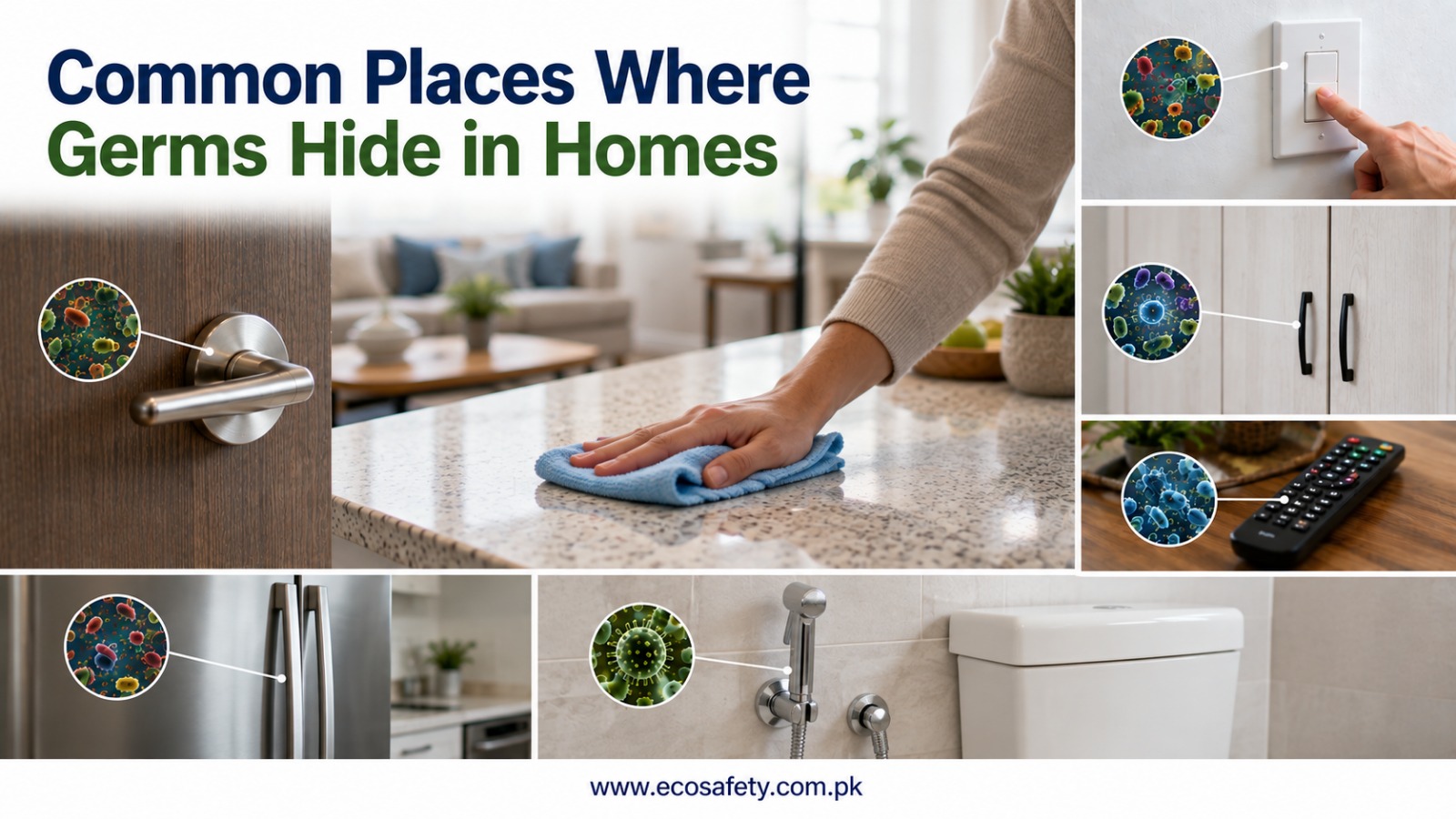
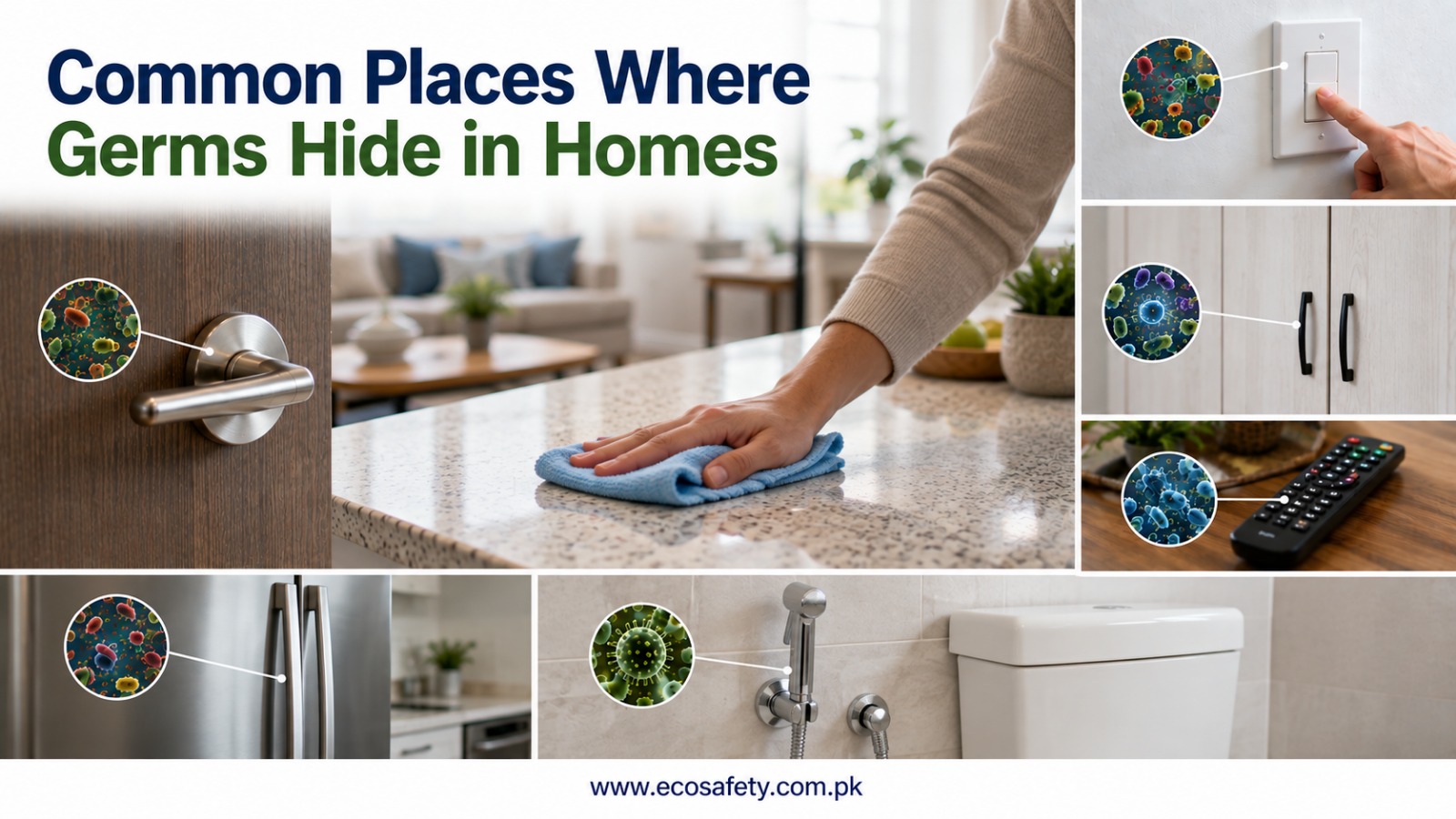
Everyday surfaces in the home are touched many times throughout the day and may be sources of hiding places for germs in the home. While these surfaces might seem clean, bacteria and viruses can survive on them and spread from person to person, hand to hand, and object to object. It’s a significant component of household hygiene and germ prevention to identify such areas.
1. Kitchen Counters and Sinks
Microorganisms are present in kitchen countertops, sink handles, cabinet handles and the handles of appliances and are picked up by frequent use. Some of the surfaces in the home that harbor germs include these common surfaces, especially if they are not cleaned regularly or are still moist.
2. Door Handles and Light Switches
Different members of the household touch door, cupboards, and light switches on a regular basis. They are important high-touch surfaces as they are presented to them on a regular basis and are part of the regular cleaning and disinfection routine because germs may accumulate.
3. Remote Controls and Electronic Devices
Shared devices such as television remotes, smartphones, tablets, keyboards, and other shared devices can harbor hand-borne germs. They are often used, and germs tend to reside there, so they are places that may not get cleaned during regular home maintenance.
4. Bathroom Fixtures
Faucet handles, toilet flush handles, cabinet knobs and other bathroom surfaces are contaminated due to a high level of contact and moisture. A number of bacteria and viruses, in addition, are hiding inside bathrooms and therefore it is particularly important to clean and disinfect the interior of the bathroom regularly.
5. Tables and Often Used Surfaces
These surfaces, like the dining table, chairs, refrigerator handles and other surfaces that come into contact frequently with our hands, food, or objects placed thereon, may become sources of microorganisms that are transferred through them. Proper cleaning of the home reduces the chances of transfer of germs through common surfaces.
6. Towels, Sponges, and Other Cleaning Devices
Sponge and other kitchen cloths become reservoirs of microorganisms if they are not cleaned, dried, or changed. Proper handling of these cleaning items is an important part of Germ Prevention in the household.
Understanding where the microorganisms can reside inside our home will make it easy for us to direct our cleaning efforts. Proper washing of hands, proper sanitization of our home and disinfecting the surfaces we touch can reduce the chances of spreading germs through various surfaces. If you need any help, germ control for home and business are an effective solution for your home.
Common Places Where Germs Hide in Offices
There are numerous surfaces that are touched and shared throughout the day in the offices that can collect bacteria and viruses. These are the top five offices in which germs are found and can give businesses an idea of where they are most likely to be present and what simple steps they can take to keep their work environment clean.
-
Door Handles and Light Switches
Doors are touched by staff members and visitors often; there are also push plates, elevator buttons, and light switches that are touched by many people on a daily basis. This list of frequently touched surfaces is a place where germs can potentially hide and be passed from one person to another.
-
Keyboards, Mice, and Phones
Frequent hand contact and contact with the keyboard, computer mouse, desk phone and mobile devices can make them popular office surfaces for transmitting germs. Germs can more easily spread via shared devices through touching shared surfaces. Appropriate cleaning and prevention of poor hand hygiene can reduce the contamination of these items.
-
Desks and Shared Workspaces
Workplace furniture, such as desks, conference tables, chairs, printers, and office stationery, is also one of the most common sites for germs. This is due to the fact that they are among the most frequently touched surfaces, and when they are not properly cleaned, they turn out to be common sites for germs in offices.
-
Break Rooms and Kitchen Areas
Some of the many surfaces in break room areas and kitchens include fridge door handles, buttons in microwaves, faucet knobs, tables, handles on cabinets, coffee makers, and shared tables. Such areas are given high priority when it comes to cleaning and sanitization efforts due to contamination from food particles, moisture, and frequent touching.
In this way, organizations will be able to gain information about the way germs spread in offices.
Germ Hotspots in Commercial Buildings
There are certain common places where germs hide in commercial buildings, where many individuals have access to the same surfaces and utilities in their routine activities. Commercial buildings may become the breeding ground for germs and therefore it is very essential to conduct routine cleaning and disinfection in order to maintain hygiene inside the building interiors.
-
Elevator Buttons and Handrails
Doors, step rails, handrails and elevator buttons are surfaces that are touched by employees, visitors, customers and delivery staff on a regular basis. It’s important to pay attention to these high-touch surfaces, as germs may be present on them and they are touched all day long. Cleaning regularly will help minimize the transmission of germs on common surfaces.
-
Reception Areas and Waiting Rooms
Common surfaces such as reception desks, chairs, counters, payment terminals and other surfaces that are touched often are hiding spots for germs in commercial buildings. Frequently used surfaces can have more people touching them when there is a high turnover of visitors. Maintaining good hygiene by regular cleaning and disinfection are helpful in these areas.
-
Shared Facilities and Washrooms
Places such as common toilets, taps, toilet flushing mechanisms, soap dispensers, door handles, and other accessories are frequently used and tend to get wet. Such places are termed the most probable “germ hotspots” in office buildings when cleaning is not done effectively. The importance of proper cleaning and sanitization cannot be underestimated here.
-
Shared Equipment and High-Traffic Areas
Printing equipment, photocopiers, vending machines, shared workspaces, security checks, or any shared equipment may act as common surfaces through which germs spread. Since such places get lots of people coming and going throughout the day, the possibility of microorganisms being transferred from person to person or from surfaces is high.
Identifying where germs are found in commercial spaces can enable facility management to know where to conduct proper sanitation and hygiene practices because such places get more traffic from employees or visitors. The process of sanitization, hand washing, and disinfection reduces the number of germs found in commercial spaces.
High-Touch Surfaces That Deserve Extra Attention!
High-touch surfaces must be given special consideration as they are touched by more than one person throughout the day. These areas are a significant source for the survival of bacteria and viruses indoors and play a role in the transmission of germs on common surfaces if not cleaned regularly.
Germs may accumulate on door handles, light switches, elevator buttons, handrails, faucets, flush handles, countertops, shared desks, keyboards, phones, payment terminals and on many commonly used items. These surfaces are germ “hot spots” in a busy household, office or commercial building if the surfaces are touched over and over again.
Properly cleaning and disinfecting frequently touched surfaces will help reduce the spread of germs in the office and eliminate germs in commercial buildings. These are special areas which, if properly given attention with care, are conducive to the proper sanitation of the interior and are a check on unnecessary contamination.
Why Regular Cleaning May Not Be Enough?
While cleaning is an important aspect, it is often not enough, especially in busy homes, offices, and commercial premises. Some important variations and factors are:
- Regular cleaning eliminates visible dirt: Regular cleaning eliminates dust, food debris, spills, and other visible contamination, but may not be effective at controlling all bacteria and viruses.
- Sanitation will minimise contamination: Sanitation will minimise microorganisms and is an important component of maintaining a hygienic indoor environment.
- Common areas that require attention in commercial buildings: washrooms, door handles, elevators, handrails, shared equipment, and reception areas.
- More opportunities for transmission: If people touch the same surfaces often, it can affect how germs are spread through common surfaces, particularly in the office or at a commercial facility.
- It’s better to have a system: Schedule regular cleaning, pay attention to high-touch surfaces, and use the right disinfectants to help control the spread of germs in offices and to keep the germ count down in commercial buildings.
- In some cases, professional assistance is needed: For large office or commercial buildings, a wider hygiene program may include professional disinfection services and/or professional sanitation services for commercial buildings if necessary in high-traffic areas or for facilities with larger shared areas.
How Do Professional Germ Control Services Help?
Professional germ control services start with the identification of the areas of the home where germs may accumulate, like the door handles, switches, handrails, washroom fixtures, etc., shared equipment, and elevator buttons. The environment is then evaluated for traffic, shared spaces, moisture, and other aspects that can affect the hiding places for bacteria and viruses in the home.
This assessment is used to determine the appropriate cleaning, sanitation or disinfection protocol for the appropriate surface. Special attention is given to high-traffic and common surfaces in commercial facilities where germs are likely to be present. This systematic approach helps prevent the spread of germs in an office, minimize contamination and eliminate germs in commercial buildings.
When Should You Consider Professional Germ Control?
When frequent cleaning is not sufficient to ensure sanitation in homes, offices or commercial facilities, professional germ control might be required. If there is frequent contact with high-touch surfaces and high-traffic areas, then a more systematic approach may be warranted.
It can also be helpful following periods of high illness rates, in areas that are shared between multiple people, or when businesses require regular cleaning and disinfection of areas where bacteria and viruses can build up. Professional germ control services are considered by offices and commercial facilities that require a structured approach to hygiene in the office to prevent the spread of germs and to decrease the amount of germs in commercial buildings.
Professional Germ Control Services in Islamabad and Rawalpindi
In Islamabad and Rawalpindi, regular cleaning, sanitization, and disinfection of workplaces, offices, and commercial spaces can prove extremely useful in cases where there is high traffic and potentially contaminated surfaces that can serve as germ sources. Professional hygiene services help find possible germ sources and clean the environment.
| Process | What It Means | Limitation |
| Cleaning | Removes visible dirt, dust, grease, food particles, and other debris from surfaces. | Removes contamination, but does not necessarily destroy harmful microorganisms. |
| Sanitization | Reduces microorganisms on surfaces to a level considered safe for public health. | Reduces microbial levels to some extent, but may not eliminate all harmful microorganisms. |
| Disinfection | Uses an appropriate disinfectant to completely kill or inactivate harmful microorganisms on surfaces. | Sometimes, overuse of chemicals (disinfectants) can affect the environment and promote chemical dependency. |
Professional disinfection services are highly necessary for hospitals, restaurants, hotels, and other business entities operating in Islamabad and Rawalpindi to ensure a safe and hygienic environment for their operations. Eco Safety is a professional organization providing disinfection services as well as safety equipment, including PPE for carrying out these activities. Those organizations that want to keep their premises hygienic and safe from health-related hazards depend on Eco Safety for professional services and safety equipment.
Frequently Asked Questions
What Are the Most Common Places Where Germs Hide?
Common places where germs hide are door knobs, light switches, faucets, elevator buttons, railings, computer keyboards, telephones, common equipment, countertops, and washroom fixtures. The surfaces that come into regular contact with people are germ magnets and become a source of germs.
Which Surfaces in an Office Carry the Most Germs?
Typical surfaces where germs are found in the office environment include computer keyboards, computer mice, telephones, door handles, light switches, shared desks, printers, and kitchen items.
How Often Should High-Touch Surfaces Be Disinfected?
It depends on how often they are touched, how many people use them and their environment. Offices and other commercial areas that see lots of action should pay more attention to their high-touch surfaces.
Can Regular Cleaning Remove Germs from Surfaces?
Regular cleaning helps remove dirt and dust but may not kill all microbes. Disinfection is a process of killing targeted pathogens by using the right method, and thus, it is vital in dealing with surfaces where pathogens are found.
When Should a Business Consider Professional Germ Control Services?
When a business has high-traffic areas and/or facilities that are shared often, it might consider looking into professional germ control services to help stop germs from spreading in the office and also reduce germs in commercial properties.
Are Commercial Buildings More Likely to Have Germ Hotspots?
Commercial buildings can also possess more germ hotspots as several people use the same area and the same surfaces. Some of the germ hotspots found in commercial buildings include elevators, reception desks, washrooms, handrails, and shared equipment.
Conclusion
Awareness of the usual areas where germs are found in the home, workplace or business environment helps individuals adopt better hygiene practices to focus on high-touch surfaces. By cleaning, disinfecting and focusing on common household surfaces that harbor bacteria and viruses, and common office surfaces that harbor bacteria and viruses, you help limit the spread of bacteria and viruses.
An integrated hygiene strategy for businesses is one way to stop the spread of germs in the office and to lower the amount of germs in commercial facilities. When further assistance is needed, professional sanitation and disinfection services assist in keeping indoor spaces cleaner and safer.
Eco Safety offers professional disinfection services to assist organizations with professional support for their offices and business premises. Disinfection helps in maintaining safe environments by emphasizing high-touch points. Professional disinfection helps maintain proper hygiene in the workplace, homes and hospitals, which promotes health and safety.